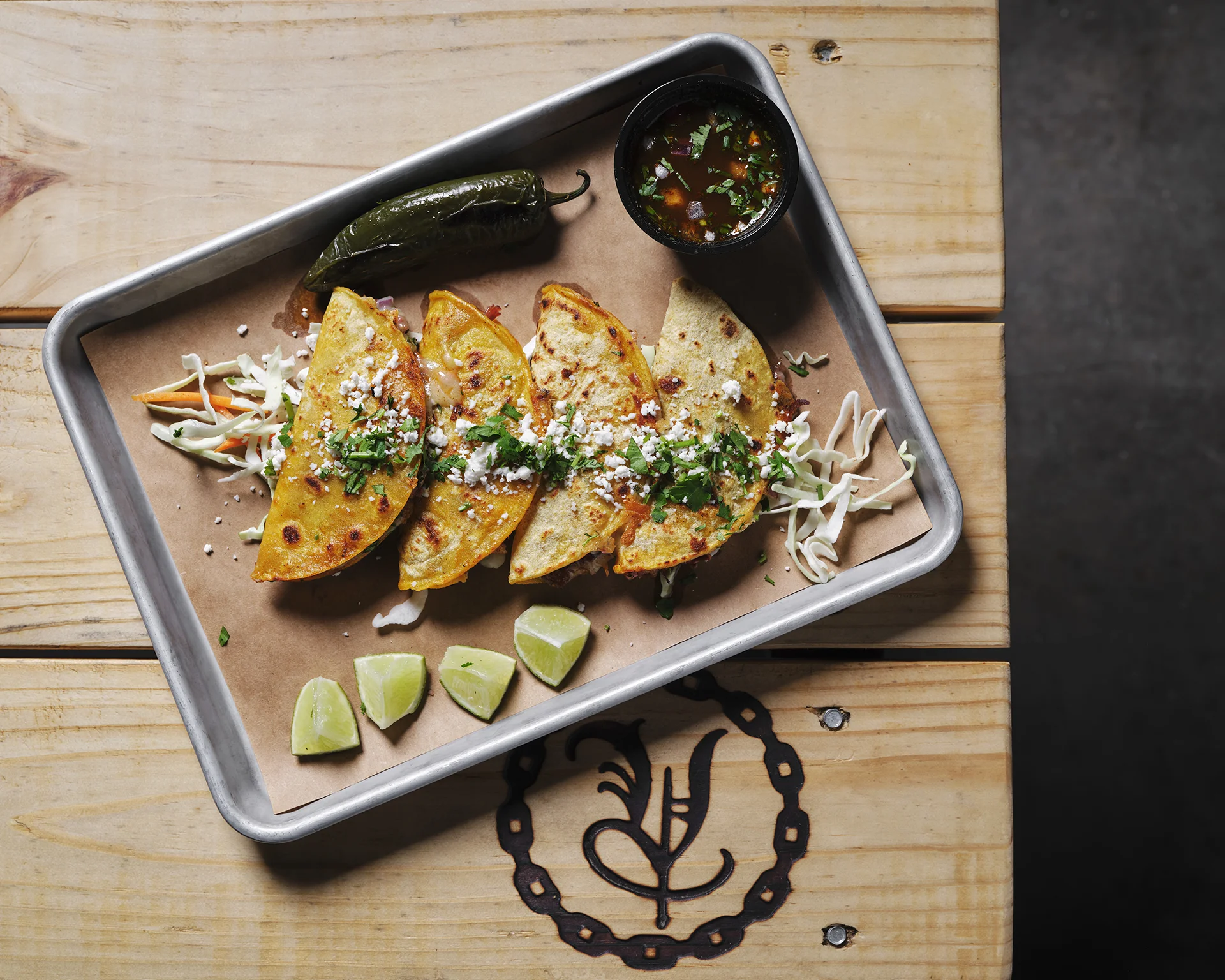
You might think Taco Tuesday is just a cheap night out, but down here it’s a ritual that solved midweek dinner friction and reshaped how restaurants, communities, and social media interact. After more than 37 years tending the pit, I’ll tell you how simple economics, clever promotion, and human habits turned tacos into a dependable weekly cue, and why it fits alongside our Texas BBQ way of life.
There’s a kinship between a taco joint and a smokehouse, plain as day. Folks who love brisket and hickory smoked ribs tend to appreciate a good taco too, because both feed a need for comfort, community, and something done right. Smoked meats and barbecue taught us the value of consistency, the patience of fire, and the power of a shared table, and those lessons helped Taco Tuesday become a night everybody plans for.
Vaqueros Texas Bar-B-Q has been part of that story, carrying on the slow, proud work of pitmasters while watching how a simple weekly offer can bring people together. What started as a promotional idea grew into a social practice, shaped by economics and people’s hunger for ritual. That’s how a quiet midweek offer became one night the whole town agrees on.
What Taco Tuesday Means Today
These days Taco Tuesday means more than discounted tacos, it’s a cultural shortcut for a low-effort night out or a shared ritual you can count on.
You head to a familiar spot, order without overthinking, and know the vibe will be casual and welcoming. You use it to reconnect with friends, decompress after work, or make weekday plans feel special without much planning.
You expect variety, from street-style tacos to fusion bowls and vegetarian options, and you’ll find places that cater to different tastes and budgets. For some, Taco Tuesday also mixes in other flavors like Texas BBQ or hickory-smoked brisket tucked into a taco, a nod to smoked meats and the work of a dedicated pitmaster.
You appreciate that it’s inclusive, families, coworkers, and solo diners all feel comfortable. Ultimately, Taco Tuesday gives you predictable pleasure, a modest treat that turns an ordinary weeknight into something communal.
Taco Tuesday Origins and Early Roots
If Taco Tuesday feels like a comfortable ritual now, its origins are surprisingly rooted in local businesses, immigrant cooks, and mid-20th-century marketing experiments.
You can trace early mentions to working-class neighborhoods, where Mexican-American families and street vendors adapted ingredients to busy schedules, selling handheld tacos for a quick, affordable meal. Local bars and corner diners picked up the cadence, pairing cheap tacos with slow-weekday drink specials to draw midweek crowds.
Community celebrations and church socials reinforced the Tuesday habit, since it sat between paydays and weekend planning. Early print ads and radio spots used the alliteration and weekly cadence to make the idea stick.
You can see how cultural practice, practical need, and simple promotion converged before big chains entered the picture.
How Restaurants Made Taco Tuesday Profitable
Restaurants turned Taco Tuesday from a neighborhood habit into a steady profit driver by treating it like a low-risk, high-return promotion.
You spot cheap, focused menus that cut prep time and waste, with a few tortilla types, proteins cooked in batches, and reusable toppings stations. Combo deals nudge higher spend, add fries, a drink, or a premium taco, while happy-hour pricing brings in groups who linger and buy extras.
Themed nights fill slow midweek seats, help schedule staff efficiently, and boost takeout and delivery with predictable demand. Smart inventory planning and limited-time specials create urgency without deep discounts.
The result is steady traffic, controllable costs, and improved margins that make Tuesdays reliably profitable.
In places where barbecue is part of the DNA, Taco Tuesday sometimes leans into Texas BBQ flavors, with hickory-smoked brisket or other smoked meats folded into tacos to add character and justify a premium price. A pitmaster touch can turn a simple promotion into something customers come back for, keeping the tone warm and authentic rather than flashy.
Taco Tuesday in Pop Culture and Social Media
When Taco Tuesday moved from a kitchen habit to cultural shorthand, it became a social-media-ready ritual you can spot in feeds from influencers to local pubs, neon signs, hands holding stacked tacos, and captioned hashtags turn a midweek meal into shareable identity. You scroll and see branded filters, memeable captions, and quick recipe reels that make tacos both aspirational and accessible.
You recognize recurring motifs, retro type, salsa-splatter shots, boomerang bites, that help creators signal community. Local bars amplify the trend with themed nights and user photo walls. Celebrities drop playful posts that give the evening broad appeal. You tag friends, save sauce hacks, and imitate styling cues, so Taco Tuesday stays visible, evolving through trends, collaborations, and platform-driven formats.
Occasionally the feeds cross paths with Texas BBQ and barbecue culture, where hickory smoked flavors and brisket make cameo appearances beside classic tacos, a nod to smoked meats and pitmaster craft. The mix feels casual and authentic, an unpretentious celebration of food and shared moments.
Why Taco Tuesday Stuck: Psychology and Habit
The social buzz around Taco Tuesday did more than make for good photos, it shaped habits you actually follow. You begin expecting relief midweek, a small ritual that breaks routine.
Repetition turns novelty into cue-response, Tuesday triggers taco plans, and social proof makes that cue stronger. Deals, countdowns, and group texts reinforce the habit loop by offering immediate reward and easy action.
You don’t have to decide, you fall into the pattern because it reduces friction. Familiarity lowers perceived risk, so you invite friends, try a new place, or text your order without overthinking.
Over time the behavior becomes automatic, anchored to calendar rhythm and community norms, which is why Taco Tuesday persists as a shared, low-effort tradition.
Taco Tuesday Variations Around the World
Although Taco Tuesday started in the U.S., you’ll find playful local twists wherever people love communal meals.
You’ll notice Mexico’s regional fillings, cochinita pibil in Yucatán, carne asada in Sonora, served with house-made salsas.
In Japan, you’ll try tacos with yuzu slaw and pickled ginger on soft tortillas.
In Sweden, tacos appear at family buffets with minced beef, crisp lettuce, and pickled vegetables, a surprisingly entrenched tradition.
In India, street vendors fuse masala-spiced fillings with naan-like flatbreads.
In Korea, bulgogi tacos with kimchi add sweet-spicy contrast.
Across cities, you’ll find vegan and gluten-free menus adapting tacos to dietary trends.
These variations keep the format fresh, a portable canvas that local cooks customize, share, and celebrate every week.