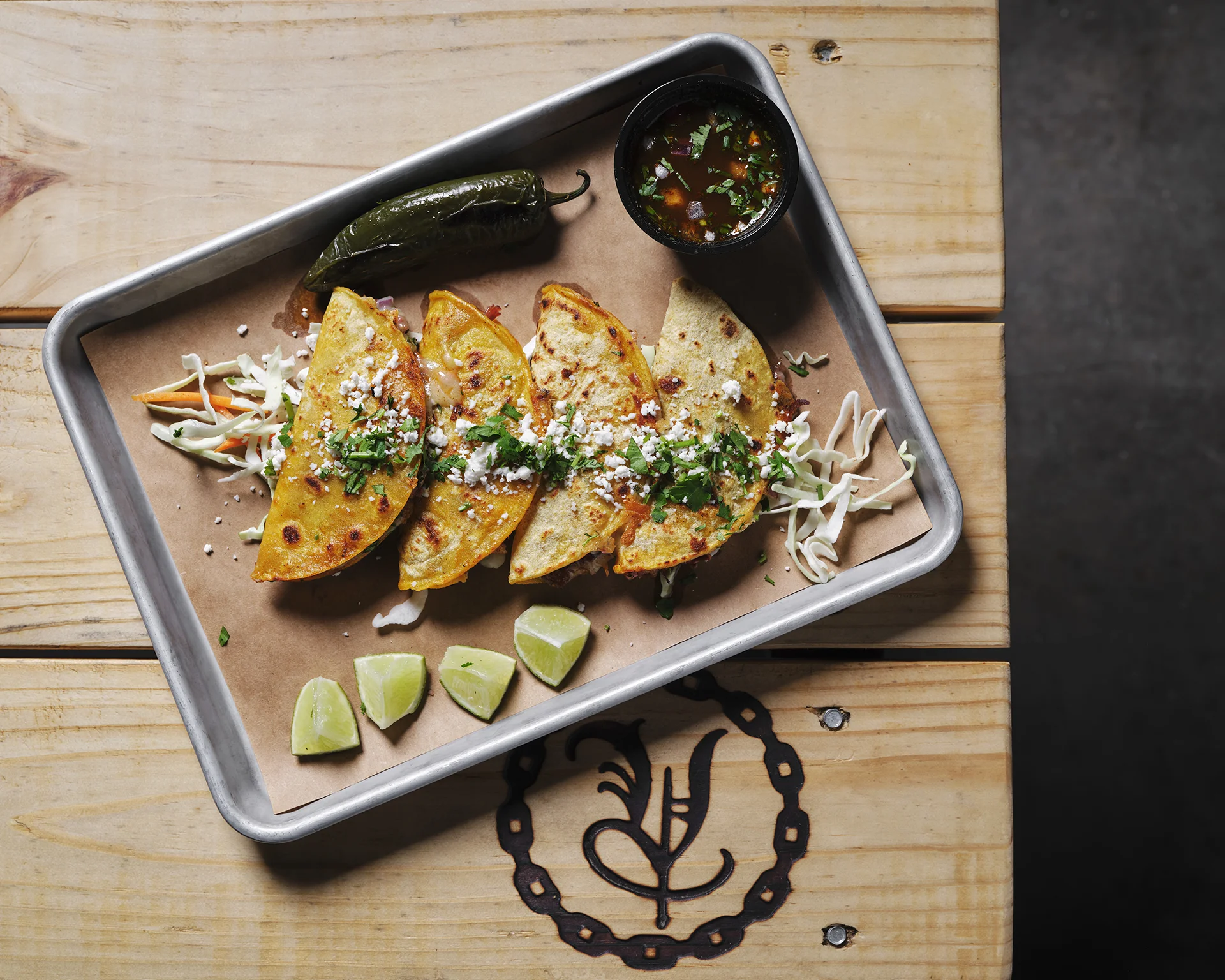
You want a taco menu that’s easy to navigate, that invites confident choices, and that handles swaps or allergies without fuss. Start with a tight set of proteins, include tortilla options, three salsas, and predictable textures. Lay out clear portions, pricing, and simple combos. Do that and guests order faster, and come back.
After more than 37 years of pitmaster tradition, Texas barbecue and hickory smoked flavors feel right at home on a menu like this. Smoked meats and brisket bring that familiar, down-to-earth pull. At Vaqueros Texas Bar-B-Q we’re proud of the way those smoky, balanced elements steady a guest’s choice and create loyalty.
Essential Fillings, Salsas & Tortillas for a Taco Menu
Start with a focused foundation, pick a small, balanced set of fillings, salsas, and tortillas that work together so every taco sings.
Choose a versatile protein, grilled chicken or slow-cooked carnitas, a fresh vegetarian option, roasted cauliflower or seasoned beans, and a seafood choice when possible.
Match tortillas to fillings, corn for traditional, flour for heartier fillings, and a gluten-free option.
Offer three salsa styles, bright citrus verde, smoky roasted tomato, and a simple pico for freshness.
Include a creamy element, chipotle crema or avocado mash, and a crisp garnish like pickled onions or cabbage.
Keep portion sizes consistent so plates look intentional, prep stays efficient, and guests can mix confidently.
If your menu leans toward Texas BBQ or smoked meats, add a hickory smoked brisket or other smoked meats from a trusted pitmaster, and pair those tacos with a bold barbecue salsa or a tangy vinegar slaw to complement the smoke.
Texture, Heat & Flavor Balance
You’ve set a solid foundation with complementary fillings, salsas, and tortillas, now think about how texture, heat, and flavor balance will make each bite memorable. Aim for contrasts, crisp elements like pickled onions or fried shallots against tender proteins prevent monotony. Layer heat sources, mild crema, a bright medium salsa, and an optional smoky chile let guests control intensity. Use acidity, lime and vinegars, to lift richness and salt to sharpen flavors. Bitterness and sweetness can add nuance, but shouldn’t dominate. Consider mouthfeel, creamy avocado, crunchy cabbage, and juicy citrus keep tacos lively from first bite to last. Taste each combination as you build the menu, so every taco finishes clean, satisfying, and distinct.
If you’re integrating Texas BBQ or smoked meats, pair hickory smoked brisket or other smoked meats with bright, acidic toppings to cut the richness. Let the pitmaster’s flavors shine by keeping sauces balanced and textures varied.
Menu Layout for Easy Mix‑And‑Match
When you design the menu for easy mix-and-match, organize items by component, proteins, tortillas, salsas, toppings, and sauces, so guests can build combos at a glance.
Use clear headings, short descriptions, and visual cues, icons or color blocks to show spice level, heat layers, and recommended pairings.
Lay out components in parallel columns or a grid so guests scan options vertically or horizontally without backtracking.
Number suggested combos for speed and include a “build your plate” prompt with step order, tortilla, protein, salsa, toppings, sauce.
Keep language action-oriented, pick, add, top, and limit item descriptions to one line.
Use consistent pricing labels and a small legend explaining icons so choices stay fast and intuitive.
Feature smoked meats and Texas BBQ options where appropriate, such as hickory smoked brisket, pulled pork, or other barbecue cuts that showcase the pitmaster’s craft.
Keep the tone warm, authentic, and unpretentious, with every element focused on helping guests mix and match quickly.
Dietary Choices & Seasonal Specials
Because guests bring a range of needs and tastes, build a clear, compact section that highlights dietary choices and seasonal specials side by side so people can decide fast.
List icons (V, GF, DF) and brief modifier notes next to each taco so diners can spot options without scanning paragraphs. Rotate a short seasonal block, three to five limited items, with a one-line flavor hook and availability dates. Offer easy swaps, tortilla type and protein swap, and mark cross-contact risks honestly for allergy-sensitive guests.
Use concise language, callouts, bullets, or a mini-grid work best. Keep seasonal items prominent but separate from core offerings so guests see variety without losing the stable lineup they expect. Update signage and training when specials change.
Include clear labels for Texas BBQ and barbecue inspired options when appropriate, like hickory smoked brisket or other smoked meats, so guests know when pitmaster-style preparations are used. Keep the tone warm, authentic, and unpretentious.
Pricing, Portions & Selling Descriptions
If you want guests to order confidently, price tacos clearly by piece and by small or large plate, and list portion cues (oz or counts) so people know what they’re getting. Show per-piece pricing alongside combo or plate options, so diners can mix and match without surprises. State protein weights or tortilla counts for plates, and note sides included. Use simple phrases like "2 tacos (6 oz total)" or "Plate: 3 tacos + rice & beans" to reduce questions.
Highlight value with a short selling line that mentions taste, sourcing, or cooking method, without overselling. When relevant, include terms like Texas BBQ, barbecue, hickory smoked, brisket, smoked meats, or pitmaster to describe proteins or preparations. For specials, include duration and price.
Finally, make certain your menu layout groups prices close to items, and uses aligned columns or subtle separators so numbers are quick to scan.