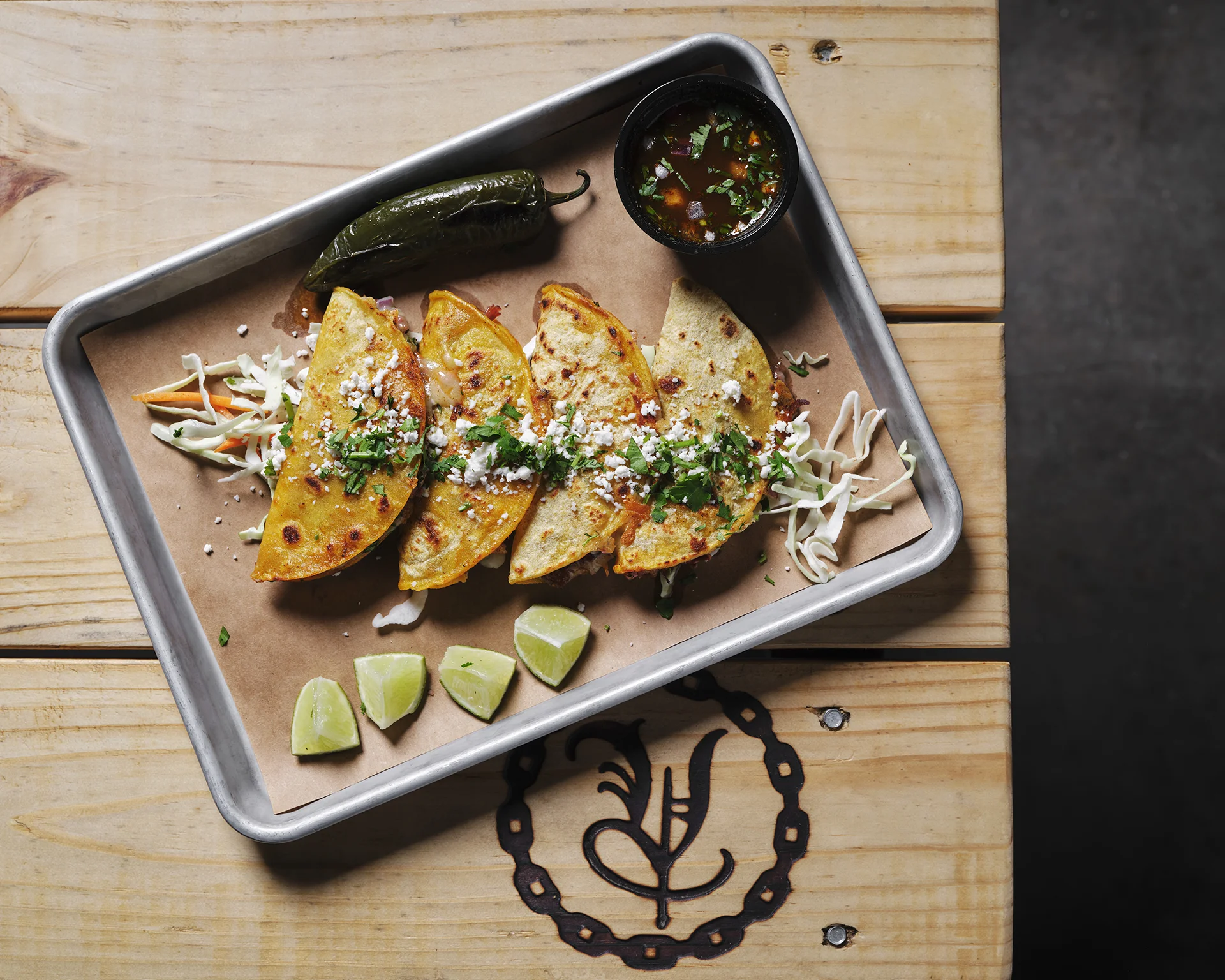
You know birria tacos from late-night stalls or viral videos, but they come from Jalisco kitchens where technique and time shape flavor. You’ll see careful chile toasting, long braises that turn collagen into silk, and the braise reduced into a dipping consommé, all choices passed down through families and vendors. In Texas we appreciate that same patient, hands-on approach that makes brisket and other smoked meats sing, whether it’s hickory smoked shoulders or a slab tended like old-school Texas BBQ. Keep going and you’ll find how those small decisions and rituals make birria a living tradition, not just a momentary craze, a feeling we honor at Vaqueros Texas Bar-B-Q with more than 37 years of pitmaster tradition.
What Birria Tacos Are and Where They Come From
Imagine a stew that became a street-food legend: birria tacos are tender, slow-cooked meat, traditionally goat, later often beef, braised in a spiced chile and aromatics sauce, shredded and tucked into tortillas you dip into the rich cooking broth, consomé.
You’ll find their roots in Jalisco, Mexico, where celebratory dishes blended indigenous techniques and Spanish influences.
They traveled from family kitchens to market stalls, adapting regionally, with sizes, fillings, and serving styles shifting as vendors experimented.
When you eat birria tacos today, you’re tasting history, communal meals, festive occasions, and practical use of tougher cuts transformed by long cooking.
Popularly spread internationally, yet authenticity hinges on the balance of spice, meat, and that savory consomé you dip into.
In places where smoked meats and barbecue traditions are strong, like parts of the United States, birria has sometimes met local techniques and flavors, and you might encounter versions that nod to Texas BBQ, brisket, or hickory smoked influence from pitmasters.
Those crossovers are examples of how food adapts while keeping its warm, authentic, unpretentious soul.
How Traditional Birria Is Made: Braising, Adobo, and Consommé
When you make traditional birria, you start by building three things at once: a deeply flavored adobo from rehydrated dried chiles and aromatics, a slow braise that turns tough cuts melt-in-your-mouth tender, and a strained consommé that concentrates all those savory flavors for dipping.
You toast and soak chiles, blend them with garlic, cumin, cloves, and vinegar into a paste that seasons meat thoroughly.
You brown the meat, coat it in adobo, then braise it low and long with onion, bay, and a splash of stock until collagen breaks down.
You skim, strain, and reduce the cooking liquid to a clear, rich consommé.
Finally, you shred the meat, reserve the juices for dipping, and assemble tacos while everything’s hot and aromatic.
This approach shares kinship with other slow-cooking traditions like Texas BBQ and pitmaster methods where low heat and time make tough cuts, such as brisket, yield to tender, flavorful results.
The essence is the same as with hickory smoked or other smoked meats: concentrated flavor built over hours.
Birria simply uses adobo and braising liquid to create that deep, soulful taste instead of smoke, producing a succulent filling and a bright, savory consommé to accompany it.
Why Birria’s Adobo and Broth Taste So Memorable
Because the adobo and consommé concentrate complementary flavor-building elements, smoke-like roasted chiles, bright vinegar, warm spices, and the gelatinous richness of slow-braised meat, they strike your palate as both intense and balanced.
You notice layered contrasts, the chiles give deep, smoky umami while vinegar and citrus cut through, lifting flavors so richness doesn’t feel heavy.
Toasted cumin, cloves, and oregano add aromatic warmth that anchors each bite, and slow braising extracts collagen, turning fat into silky body that carries spices evenly.
Simmering reduces and melds acids and fats, concentrating taste and creating a broth that coats tortillas and meat alike.
The result is memorable because every component amplifies another, so each mouthful feels purposeful and complete.
Regional Birria Tacos Across Mexico: Jalisco and Beyond
A map of Mexico’s birria shows how one dish branches into many local identities. Jalisco’s goat-based, deeply roasted birria sets the classic template, while nearby states tweak meats, chiles, and consomé to reflect local tastes and ingredients. You’ll find lamb in some northern towns, beef in urban centers, and mixed meats where tradition meets availability.
In Michoacán, you might taste brighter, more herb-forward notes, in Puebla chiles ancho and pasilla lend earthier tones. Coastal areas add lighter seafood versions or citrus accents. Street vendors and family kitchens each guard small variations, tortilla style, dipping broth viscosity, garnish choices that signal place and history. Exploring these differences teaches you how birria adapts without losing its soulful core.
Making Birria Tacos at Home: Cuts, Timing, and Chef Tricks
Choose the right cut and plan your timing, and you’ll get tacos that taste like you’ve been slow-cooking them all day.
Pick beef chuck or short rib for marbling, or goat or lamb if you want authenticity and richer fat. Trim excess silver skin but keep connective tissue, it renders into gelatin. Brown the meat to build flavor, then simmer gently.
Use a low 275–300°F oven, or a slow cooker on low for 4–6 hours, until forks slide through.
Rest the meat, shred against the grain, and reserve cooking juices. Toast and dip corn tortillas in strained consommé, then crisp briefly on a hot comal for texture.
Finish with diced onion, cilantro, lime, and a spoonful of warm consommé at the side.
How Vendors and Families Keep Birria Tasting Authentic
When folks guard birria’s soul, they stick to simple, repeatable practices, family recipes are treated like heirlooms, vendors keep the same blend of dried chilies, often guajillo, ancho, and pasilla, and they measure by feel as much as by weight.
You learn authenticity by watching, slow simmering, skimming fat, and tasting for balance instead of following trends.
You respect animal parts and cuts chosen for collagen and flavor, braising until forks slide through.
You keep garnishes minimal, onion, cilantro, lime, and serve consomé hot, not diluted.
You protect technique across shifts with clear roles, one person tends heat, another plates tacos.
That consistency, passed down and enforced daily, is what keeps birria unmistakably itself.
Modern Twists: Quesabirria, Birria Ramen, and What Changes
Keeping those time-honored methods alive, cooks still experiment, and you’ve probably seen birria take on bold new forms like quesabirria and birria ramen. Quesabirria combines crunchy, cheesy tortillas with juicy, slow-braised meat and a warm consommé for dipping, amplifying texture and savor while preserving the core spices.
Birria ramen adapts the braising broth to noodle culture, pairing tender meat with soy or miso notes and slurpable noodles so the dish fits new dining contexts.
When chefs change the format, they usually preserve the chili blend, the long braise, and the meat-to-fat ratio that define birria’s profile. Those tweaks broaden audiences and settings while keeping sensory anchors intact, so you still taste birria’s soul even in playful plates.
In some kitchens, elements from barbecue traditions appear alongside birria, such as hickory-smoked finishes or a pitmaster’s attention to smoked meats and brisket, bringing a familiar, smoky echo without replacing the dish’s essential identity.
Why Birria’s Culinary Depth and Community Roots Make It More Than a Fad
Because birria is rooted in generations of technique and shared tables, it resists vanishing as a mere trend. You taste history in the layered chilies, slow-braised collagen, and hours-long stewarding of flavor that local cooks pass down.
You learn technique, respect ingredients, and join communal rituals when you eat it, family stews, market barters, and neighborhood taquerías shape how birria evolves. Those social practices anchor the dish, so when chefs remix it, they’re building on a living tradition rather than inventing from scratch.
You recognize authenticity not by purity but by dialogue, recipes adapt but remain accountable to provenance and method. That accountability, plus the dish’s depth, gives birria cultural durability beyond fleeting food fads, and its slow-cooked, smoky qualities resonate alongside traditions like Texas BBQ and other smoked meats without losing its own identity.